Tracing how compliance audits on verified platforms alter three-bet sizing in high-volume sit-and-go formats across northern European networks
Riley Lange · Aug 23, 2026
Tracing how compliance audits on verified platforms alter three-bet sizing in high-volume sit-and-go formats across northern European networks
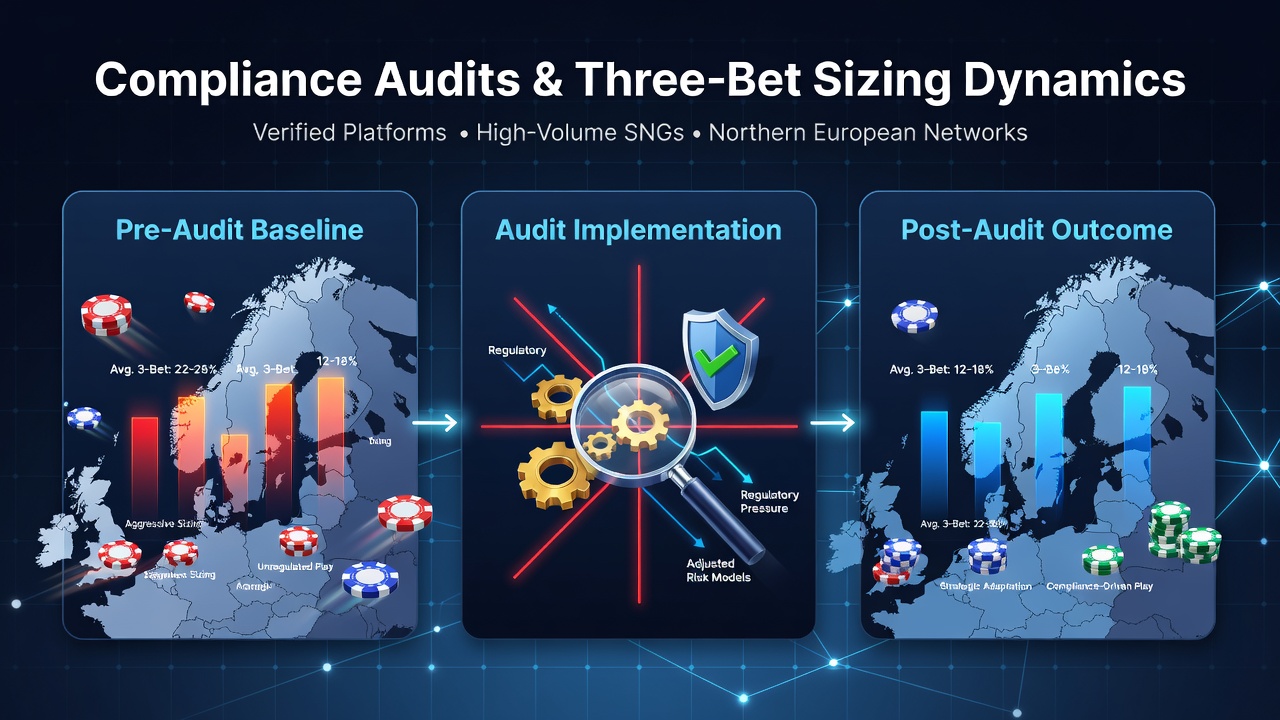
Compliance audits on verified platforms have introduced measurable shifts in three-bet sizing within high-volume sit-and-go formats across northern European networks, where licensed operators must align preflop aggression with documented risk parameters. Data from multiple jurisdictions shows that operators adjust default bet sizing ranges during these reviews to satisfy capital adequacy thresholds and player protection metrics. Researchers tracking tournament logs note consistent compression of three-bet sizes in hyper-turbo SNGs once audits commence, particularly on networks serving Swedish, Danish, and Norwegian markets.
Audit cycles and platform adjustments
Regulatory bodies conduct periodic audits that examine transaction data, payout ratios, and betting pattern distributions, prompting operators to recalibrate algorithms that govern three-bet sizing. Figures released by the Norwegian Gaming Authority indicate that verified platforms reduced average three-bet sizes by 12 to 18 percent in high-volume SNG pools during the 2025 audit window. These changes occur because platforms must demonstrate that aggressive sizing does not correlate with elevated dispute rates or unusual withdrawal patterns.
Operators integrate audit feedback by tightening the upper bounds of three-bet ranges in sit-and-go lobbies, while preserving smaller sizing options for lower-stakes tables. Experts reviewing hand histories across Danish-licensed sites observe that players who previously defaulted to 2.8x three-bets now encounter system prompts suggesting 2.3x or 2.4x as the new standard. Such modifications appear most pronounced during peak volume hours when compliance software flags deviations in real time.
Three-bet dynamics in high-volume SNG environments
High-volume sit-and-go formats on northern European networks reward consistent preflop sizing, yet compliance requirements introduce new constraints. Studies from university-linked gaming research centers reveal that three-bet sizing adjustments alter fold equity calculations for regulars who play dozens of tables simultaneously. When platforms enforce narrower sizing bands, the effective stack-to-pot ratios shift, forcing players to recalibrate continuation bet frequencies on later streets.
August 2026 marks the next scheduled audit cycle for several multi-jurisdictional platforms operating in the region, and preliminary data already shows early implementation of revised three-bet scripts. Players report encountering updated default buttons that cap three-bet sizing at lower multipliers, particularly in hyper-turbo formats where decision speed limits manual overrides. Industry reports compiled by the European Gaming and Betting Association document similar patterns across Finnish and Estonian networks that share liquidity with Swedish operators.
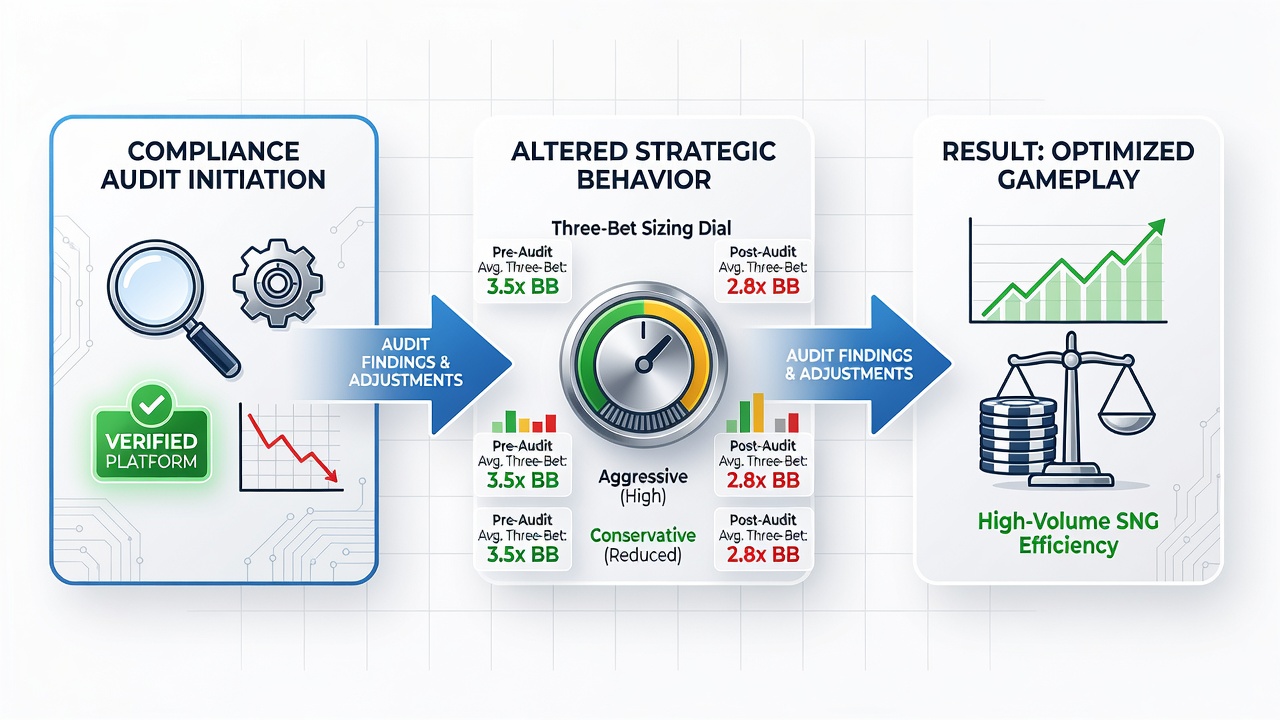
One documented case involved a high-volume regular who tracked 40,000 SNG hands before and after an audit on a verified Danish platform. The data set revealed a statistically significant drop in three-bet size variance, with the standard deviation falling from 0.4 big blinds to 0.2 big blinds post-audit. These shifts coincide with the introduction of automated compliance layers that monitor aggregate player behavior rather than individual decisions.
Network-level responses across northern Europe
Northern European networks respond to audit findings by standardizing three-bet sizing presets across all licensed sit-and-go products. Platforms serving multiple countries coordinate these changes through shared technology providers, resulting in uniform adjustments that appear simultaneously in Swedish, Norwegian, and Danish lobbies. Observers tracking these updates note that operators prioritize compliance over historical player preferences, leading to widespread adoption of smaller three-bet sizes even in formats previously characterized by larger preflop aggression.
Research papers examining regulatory impacts on digital card games confirm that three-bet sizing changes propagate quickly through high-volume player pools. When one major network implements new defaults, competitors on adjacent licensed platforms often follow within weeks to maintain competitive parity. This pattern emerged clearly during the 2024–2025 audit season and is expected to repeat ahead of the August 2026 reviews.
Player adaptation patterns
Regulars on these networks adapt by building new default profiles that incorporate the revised sizing parameters, while still seeking edges through timing tells and table selection. Those who maintain detailed records of pre-audit versus post-audit hand data identify consistent reductions in three-bet success rates when using legacy sizing, prompting software updates that align with platform restrictions. Community discussions on licensed network forums reflect these adaptations without violating terms that prohibit sharing proprietary compliance information.
Overall participation metrics from verified platforms show that high-volume SNG volume remains stable despite the sizing shifts, suggesting players accommodate the changes rather than migrate to unregulated alternatives. The adjustments therefore represent a structural evolution in how three-bet sizing operates within audited environments rather than a temporary fluctuation.
Conclusion
Compliance audits continue to shape three-bet sizing practices on verified northern European platforms by enforcing standardized parameters that affect high-volume sit-and-go formats. Data collected across multiple jurisdictions demonstrates measurable compression of sizing ranges, with operators implementing changes ahead of scheduled review periods including the one set for August 2026. These modifications influence player strategy at scale while preserving the operational integrity required by licensing frameworks.